Monday, May 14, 2018

Bliss and curse of marriage

The bliss and curse of marriage

Synopsis : The marriage can be a bliss or a curse depending on the partners and how they cope with day to day challenges of marriage that may be numerous. If they love each other and are determined to overcome all difficulties, the marriage can be a bliss but otherwise it can be a curse. The blogs looks at the issue of marriage critically.

Dealing With Abuse


                                                Source : Google photo of curse of marriage


mtmzntgynzywmdm0otcwmjqz (1)

                                                 Source : Google photo of bliss of marriage

People often think about marriage at a certain age. Perhaps women think of it earlier than men because their biology is different than men and they become physically mature earlier than men. But the maturity that is more important is the mental, emotional and psychological maturity that is needed to make a rational decision about choosing a mate who may be for life so it is not an easy decision to make for anyone.

People who rush into marriage only learn to their regret the wrong choice they often make and live the consequence. I will not write about those who do not marry but live with their mates and say that they are called the liberated women who do not believe in matrimony. They say that marriage is an outdated concept that is no longer valid in the modern world. I agree to disagree with them so I will put forward my own thoughts on this subject in the most cogent way possible. This is not to change the mind of anyone but to present a different perspective on the subject.

From time immemorial, man has sought his mate and his society’s approval in the choice through the act of marriage. Believe it or not, man is a social animal and cannot do away with the society and its rules. Some societies are more orthodox in their approach to morality and immorality but by and large all societies are run by a set of rules that are enforced communally to ensure the continuation of certain values they hold dear. This is also true of primitive societies.

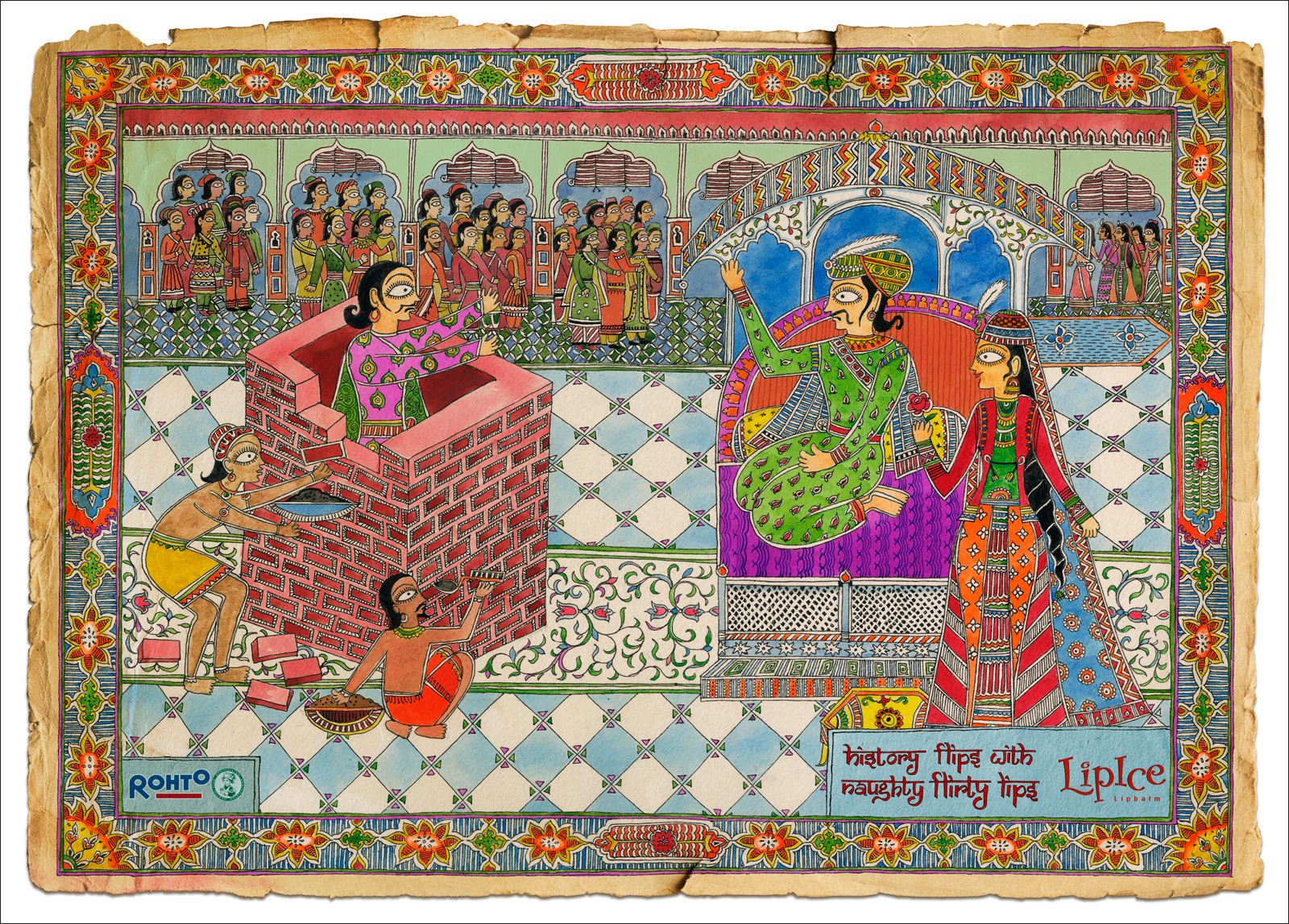
Marriage therefore becomes a communal affair and everyone wants to participate in the joyous celebration of a marriage that may last several days. More than the union between a man and a woman, it brings two families together. There are several types of marriage depending on the class of the people. In high society, a marriage is often used as a tool to consolidate power and business so less importance is given to the feelings of the couple in question. Jalaluddin Mohamed , the great Moghul ruler called Akbar married Jodha Bai who was a Hindu princess from Rajputana so that war could be avoided.

There was no love between them at first but later she became his most favored wife. This type of marriage was and still is practiced by the European aristocracy resulting in the mixing of blood of various royal lines. Most of the royal houses there are interlinked through marriage but these marriages were the result of necessary political alignments and not due to the alignment of the hearts of the young princes and princesses.

So what I write about is not about the marriages of political alignment of the aristocracy that still exists but rather about the common man and woman in every society. This happens in two ways. One is the traditional arranged marriage that is still practiced in many countries like in India and the nontraditional marriage in many countries where men and women are free to choose their mates through courtship with or without chaperons. In India such marriage are called love marriages and are frowned upon. The traditional arranged marriage has nothing to do with love although many women claim that love blossoms later in their marriage.

In such traditions, the responsibility of getting the daughter or son married rests entirely with the parents or guardians. Once a suitable girl or a boy is found, a thorough background check is made about the boy’s character ,habits etc but more importantly how much he earns and how good is his job. The family he comes from may be of secondary importance. The boy’s family then scrutinizes the girl thoroughly to determine if she is pretty and has good moral character. She of course needs to be a virgin although her possible mate may escape such scrutiny.

A tentative consent from both parties is then sought and the two families then get down to the serious business of how much dowry the father of the daughter must pay, what are the other expenses, nature and the kind of gifts expected from both sides etc. Once these deliberations are complete, a priest is called to determine the most auspicious day and time for the marriage and all other preparations then get started. This is still the practice among the Hindus. A “love marriage “ is discouraged by the tradition so the girl may not have a boy friend or the boy a girlfriend although this system is under scrutiny and is slowly changing as more and more young people decide for themselves who they want as their lifelong partner.

Often someone makes a childhood promise to his best friend that if they have a son and a daughter, they will arrange such marriages between two families without asking the girl or the boy at all. I know a case where a fellow I knew found his love in a South Indian woman and decided to get married but his father strongly disapproved the marriage saying that he had given his word to his best friend that his daughter will be the bride. He then disowned his son and refused to attend his marriage because he felt that he had lost his face. The couple married and moved to the United States and live there happily. This was a classic case of “love marriage”.

Now I will mention also a classic case of arranged marriage. I knew a boy who was one year junior to me in college , smart and good looking. He found a good job after graduation and married a woman through arranged marriage .This woman was so bad that he was very unhappy and started to drink that eventually killed him at an early age. In arranged marriages, the man and the woman has no chance to get to know each other before marriage so often there are surprises like this.
I know another case where a sweet girl got married at the age of 19 but her husband turned out to be a very jealous person who abused her and drank a lot that also killed him . But her two children from her marriage to this bad person are jewels and take very good care of her so now she is happy and lives a religious life.

So not all the arranged marriages are successful but most just accept their fate and live together by compromising their own dreams and aspirations for the sake of their children. Divorce is rare because the society disapproves divorce although I knew a very intelligent and pretty girl who was married to a very bad and abusive person and one day ran away from him and later got divorce. She has remarried and lives happily in England so she was lucky. Not many women trapped in abusive marriages are so lucky. Often they get no support from their parents and siblings because they wash their hands off once a woman gets married. I think the hated dowry system has something to do with it. So the system of arranged marriage continues in India and in other countries.

Among the Muslims, the same system exists but the women are more prone to abuses because a fellow can just say “talaq” three times and divorce his wife leaving her with no money, property or even children and does not have to give reasons for his divorce. Such women often become destitute. There are women who are now pushing for laws that protect their rights but it is still a long way off because Mullahs protect the right of men more than women.

Another practice among the Muslims is to marry the first cousin which leads to inbreeding and may cause genetic abnormalities in children. Hindus prohibit marriages between the cousins due to this problem although most Brahmins marry only among the five families that may have originated only from one a long time ago that may suggest inbreeding as well.

In the west, the men and women choose their mates through dating that  starts early in high school .Many such high school sweet hearts get married the day they graduate from college while others do not wait that long. I had a roommate in College who one day announced that he was getting married to a woman he just met a week ago .But it however, is more of an exception than rule because most people spend a great deal of time knowing each other before deciding on marriage. Parents are not involved except in the preparation of the marriage and paying for some expenses. In America women often make a list of what kind of gift they want from their relatives and friends but in other countries the women do not ask for gifts because their values are different.


If you happen to be a Caucasian woman and go to the Middle eastern countries, you may get many marriage proposals from Bedouins and others who may propose to buy you with 30 heads of camels and may throw in a few goats and sheep as well to seal the deal if you accept his proposal to live in his harem in a goat skin tent and cook, wash (seldom) and breed like others. In other countries like India it is the bride that brings in the dowry so literally buys her husband. There may have been social reasons for this system but now it is obscure yet still practiced.


In rural India, child marriage is still practiced although banned by the government. I had a 16 year old classmate who was hiding from his parents who were hell bent on getting this young fellow married to a still younger girl who was still a child. I do not know what finally happened but felt sorry for him. In some remote villages in the Sundarban swamp land south of Bengal there is still a system when a visiting young man as a part of a marriage party is forcefully married off to an ugly girl who otherwise would not get married.

Among the Hindus, the marriage ritual is simple although lengthy that does not require marriage license, registration, witnesses etc. No papers are signed and no documents required registering the marriage somewhere in a Government office but this sort of forced marriage cannot be annulled. I know a case when this happened.

In the Philippines there is still a system in rural barrios where a boy who is interested in a girl is asked to work in her father’s farm for a year or more proving his worth as a sturdy hand who will later need his experience to work as a farmer.

This also gives everyone concerned an opportunity to evaluate the fellow over a long period of time. But these systems tend to become obsolete as more and more young boys and girls are going to school and make up their own mind about marriage. This is happening in many countries but such changes come at a price. The dogmatic refusal to accept change in certain societies lead to tragic consequences .A recent case comes to mind where a young girl and her boyfriend were lured into an empty bus late at night in Delhi. The boy was beaten senseless by the driver and his cohorts and left by the road side but the girl suffered gang rape and serious injuries in their hands and left to die also by the roadside. She was brought to hospital and the prime minister’s plane brought her to Singapore for hospital care but she did not survive so grave were her injuries.

The question to ask here is why was she raped and beaten up? This has something to do with the belief that a young woman should not be out late at night with her boy friend so she must be immoral and must be punished. This sort of tribal belief leads to honor killings among Muslims in some countries. The traditional society in many countries frowns upon women who have boyfriends and are seen in public so they take it upon themselves to “preserve the virginity of women” so that the tradition of virgin bride is maintained at all cost. In such societies, the mother of the newlywed woman must show the blood spattered bed sheet by hanging it in the window for anyone to see that her daughter was a virgin.

If the woman was not virgin before marriage then the poor mother has to sprinkle goat blood on the sheet although I wonder if that fools anyone. You may think that this is an extreme case of prejudice against women but such are the tribal practices in many parts of the world.

Now let us return to the subject at hand that is the bliss and curse of marriage. The marriage is a time honored tradition worldwide that celebrates the union between the man and the woman by giving it the social approval. What happens after the marriage is left to the couple in most cases although the in laws interfere in some instances. If the woman finds happiness and comes to love and respect her husband who does the same, all is well. A happy marriage then seals the bond between two people that may last a lifetime. This is the bliss .Out of such bliss come happy children who are loved and cared for.

I know some couple who have been happily married for a long time and take care of each other in their old age. In America it is good to meet such people because many marriages end up in divorce and broken families. Apart from the couple, the children suffer the most. The Hollywood movies and TV shows point this out graphically everyday as if it is quite normal for the families to split up due to their personal differences or for other reasons.

I tend to think that there is nothing normal about divorce which is the result of deep intolerance and inability of a person to adjust and make some compromises in life. This is the curse of marriage. A bad marriage as I mentioned earlier that ends up in divorce is good and it gives the woman the chance to regain control of her life. If the woman is bad then it gives the man a chance to regain control of his life and move on although a friend of mine died of alcoholism because he could not get away from his bad wife. If both are bad like Bonnie and Clyde then there is no help for them.

The notion that two people must get along in a marriage automatically or without any fuss requires some introspection. People have different personalities and are brought up differently by their parents. Some spoil their children who later grow up to be more spoiled and develop an intolerant personality. They must have everything their way with little room for compromise and understanding. Others give good example to their children by their own happy marriage and hope that the kids develop into well rounded persons with compassion and willingness to adjust to any situation. Such people make wonderful marriage partners.

They easily forgive and adjust to the shortcomings of their partners not necessarily condoning their faults but gently pushing their spouses in the right direction.

The marriages are not made in Heaven but often bad attracts bad and good attracts good in people. The trouble starts when good and bad try to make a successful marriage because they are like oil and water. They do not mix so the Indians look to astrology and advice from astrologers to see if the two people are well matched. A woman dating a man may find out sooner or later certain things about a man and vice versa but I am writing about the traditional society like in India. I do not have any statistics to prove if it works or not but I do know that the divorce rate among Hindus is very low. How much is due to societal pressure or astrology is hard to tell.

What I do know is that two people who are happy together have a few things in common. One is a willingness to compromise and meet the other partner halfway. This willingness to give up a few things and compromise in order to have a peaceful co existence is of paramount importance more so if the couple comes from two very different background or even religion. The second is to remember what your spouse likes and dislikes and adjust accordingly. It may be little things like your wife likes to drink chilled water so always remember that or the husband likes to read late at night or watch something in the TV. This habit of remembering each other’s likes and dislikes goes a long way to make a wonderful marriage .It is like WD 40 or even better.

Third is to be always available to your spouse in all her needs at all the time. If she needs a ride, be ready. If she wants you to wait for her at a certain place then be there. This of course works both ways. A person who subserviates his own likes and dislikes to his wife is an ideal partner in a marriage because he is willing to compromise the most. I think my last point will sum it up nicely when I say that between two people who are married and are living under one roof, it is very important that there is some space between them so that each person feels free to pursue his or her interest. Both should respect each other’s freedom and space.

I will quote here a few words from The Prophet by Kahlil Gibran that are worth reading:

“ You were born together, and together you shall be forevermore.
You shall be together when the white wings of death scatter your days.
Ay, you shall be together even in the silent memory of God.
But let there be spaces in your togetherness and let the winds of
Heaven dance between you “
“Give your hearts but not into each other’s keeping.
For only the hand of life can contain your hearts.
And stand together yet not too near together: For the
Pillars of the temple stand apart, and the oak tree and
the cypress grow not in each other’s shadows.”


Note :  My blogs are also available in French, Spanish, German and Japanese  languages at the following links :


tumblr posts    

Blogs in French
Blogs in Spanish
Blogs in German
Blogs in Japanese
Anil’s biography in Japanese
Anil’s biography in French.
Anil’s biography in English.
Anil’s biography in Spanish.
Anil’s biography in German
http://achtrjee.wixsite.com/mysite/blog



Subscribe

Wednesday, May 2, 2018

Dignity and self-respect


Dignity and self-respect:

Synopsis :  Dignity and self-respect are wonderful values that everyone should strive for because it defines the character of the person that sets him apart from others  who do not have  it.


rosa-020316

Source : Google photo of Rosa Parks (Craig Petersvikings.com )

When the Japanese zeros appeared all of a sudden in the sky above Pearl Harbor in Hawaii, people panicked and ran for shelter where they could. They could not believe what they were seeing that people were attacking America and rained down bombs the like of which they had never seen before and had no experience of how to deal with the situation.

They picked up their pitiful and obsolete guns to fire at the Zeros very ineffectually but made no impression. The whole shipyards and docks where naval ships and destroyers were moored went up in flames and were totally destroyed in a short time such was the power of the sudden attack. It brought a great shock in Washington when they learned that their entire Pacific Fleet of ships and planes were in tatters so there was no defense left for them to stop the Japanese if they so desired.

The Japanese admiral Yamamoto was pressed by his staff to push ahead and destroy the land based military targets in California also to really cripple the enemy but he said that he has completed his task and will head back to Japan. The reaction in Washington was swift when the USA declared war on Japan the very next day and started to prepare for it.

One of the decisions taken by the government in Washington that day was to arrest all American citizens of Japanese descent and place them in concentration camps hastily put up in desolate areas of California and elsewhere that was an infamy seldom repeated in any country where their own citizens were thus treated.

Most of the Japanese people who lived in the United States were living in decent homes and had proper means of livelihood and led a peaceful if not prosperous lives so they were very surprised when one morning the military police came to arrest them and told them to leave everything behind except a small suitcase. They were hastily picked up but were not told why they were being arrested and where they were being taken to or for how long. Their protests that they were American citizens fell on deaf ears so silently they picked up a few belongings and climbed onto waiting trucks to embark on an unknown future. The women and children shed tears at this injustice but they did not cry out loud and tried to comfort each other by hugging and consoling but their nightmare was just starting.

They were treated harshly, photographed and documented, taken finger prints of and pushed into tents in the sweltering heat of Manzanar and many such camps where they were to live for an unknown length of time. The Japanese Americans took it calmly and did not fight back. They were very clean people so even in camps they kept their tents and all areas around it spotlessly clean.
When their clothes got tattered, they patiently repaired them and washed if it was possible. Most of all they kept their dignity silently. They never lost their self-respect even under the harshest condition they were forced to live under due to no fault of their own. They redefined the word dignity and self-respect.

Their houses were vandalized and looted by the hoodlums energized by the propaganda that all Japanese Americans were suspects because they may have aided the enemy somehow that led to the attack on Pearl Harbor. Their frenzy of hate was fueled by the military that treated the Japanese Americans high handedly but they kept their dignity and self-respect.

It is known that the dignity and self-respect starts to vanish where people face harsh conditions under which they have to survive due to war or other calamities. You will see this in very poor people who will do anything to get food and shelter and will fight each other often spilling the food in the dirt in the process. They will lie, cheat and hide their identity to get food packages and water because to them survival at any cost becomes the motto.

That is why it was all the more admirable the way the Japanese Americans kept their cool and dignity even when their lives were turned upside down in an instant. They come from a rich culture that is thousands of years old where self-respect and dignity becomes a part of their DNA, where they would rather commit suicide than to face shame and injustice.
None of the Japanese Generals pleaded for mercy even when they were about to be executed by the victors later and calmly put the rope around their neck accepting their fate with greatest dignity possible.

I am often surprised at this lack of basic decency in people in many countries. In America you will often see people old and not so old who will approach you and start talking to you about something that you do not understand or care about. They will offend you with their foul smell, rotten teeth and poor clothes; will wink at you in an exaggerated manner and talk about somebody you do not know in a vulgar way.

There was a young woman in Washington who shared my taxi there one day and declared that she had just gotten engaged showing her finger where she had a ring. She was a total stranger. What surprised me was when she got off and the black taxi driver started denigrating her in most vulgar words calling her bitch and other such names. Where was the self-respect in the young woman and where was it in the driver? How could anyone share with strangers something personal as an engagement showing her rings to anyone? Where was the dignity?

Does poverty automatically mean that you have no self-respect and dignity? Couldn’t people learn something from the Japanese?

I see this in children in Africa where they will fight each other for a scrap of food because they lose all discipline and self-respect when someone offers them food. It happened to us in Mali when we offered meat and rice to the village children one day during Christmas. There was enough for everybody but they could not wait, pushed and shoved each other so that the food fell onto the dirt that they started picking up and eating. We were appalled and shocked.

But when such behavior is found in adults then you wonder if they have any self-respect and decency. When self-respect is deeply ingrained in the culture of people, it shows the way they stand erect in the face of adversity and never give up. The Japanese people showed a deep resilience even after the atom bomb was dropped on them killing hundreds of thousands of men, women and children, young and old and mourned their losses with unbelievable bravery.

It was the same way the Vietnamese people stood up to the French and Americans for decades, suffered in their hands and silently buried their dead with prayers  but fought on with stronger determination that eventually gained them complete victory and freedom.

The legendary heroine in Vietnam was immortalized in a book called Kim Van Kieu where Kim prostituted herself to feed her family like so many women during the war. They had pride and self-respect even when they sold themselves. When the Americans visited the memorial shrine in My Lai where hundreds of innocent men, women and children were massacred by the troops in the most infamous incident of the war, they found people there who had lost their loved ones who forgave the visitors. It takes great courage and dignity to forgive the perpetrators of such crimes.

I have lived in many countries and have noted that in many places people behaved in a manner that can only be described as undignified and callous .In Algeria people openly suggested that my bank transactions would go smoothly only if I allowed them to use my apartment for their sexual adventures. They had no self-respect or dignity at all .Frankly they should have been ashamed of their behavior but they weren’t.

So I think that people have to learn from their childhood the meaning of self-respect from their parents in their family. It comes from education but not always. When I gave a ride to my village people in Mali, they always left a basket of fruits or a chicken at our door because they had self-respect and would not take a free ride although they were so poor and uneducated people.
When I worked with the farmers in Algeria often late in the day, they would put eggs or a loaf of bread and a chunk of cheese in my hood at the back of my djellaba ( an Arab gown of camel hair) out of gratitude. They were so poor that they wore tattered clothes and shoes but they had dignity. They shared their frugal meal with me delightfully.

We were taught since childhood not to accept anything from anyone unless our parents gave their nod. They taught us what it means to have self-respect. It meant never to bow to anyone and ask for anything. It meant that frugality they practiced and taught us was nothing to denigrate because it allowed them to live within their means and still meet their daily needs. It meant going without the things they considered luxuries in order to pay for our school fees. It meant cheaper clothes and shoes that our Ma always washed and polished just like the Japanese mothers in the concentration camps in the USA.

They taught us values that are priceless because you do not learn such things in schools. But now it seems that such values are disappearing judging from greedy children who misbehave when they see something given away for free. It shows in adults who fall in line again and again to get the aid packages dishonestly because the donors cannot remember their faces. It shows in people who bring plastic bags and secretly fill it with food that is given out for people to eat there.

Once we were invited to a village wedding feast in India but our Ma cautioned us to eat before going there because she said that village folks are rough and tough and will shove us aside to get to the food so exactly that is what happened shocking us. We were brought up differently and patiently waited for us to be seated and offered food but it did not happen.

So I often think about this topic of self-respect and dignity and why some people have it while others don’t. What does it take for one to learn that self-respect does not have much to do with poverty as such because it is a value that one can learn from the parents if they practice it?
I think that honesty is at the root of all good behaviors. If you are honest, it means you have a conscience that tells you what is wrong and what is right all the time but this honesty is a learned experience. You can’t grow up honest in a den of thieves and dishonest people.

Recently nearly 300000 students taking the high school exam in the northern State of Uttar Pradesh in India dropped out because they could not cheat due to the CCTV cameras installed in examination centers. This sort of massive cheating in Board exam was unheard of during our time showing a deterioration of moral values in young people now.  Such dishonesty is a learned experience so the question to ask here is who is teaching these young kids to be so dishonest?

A country cannot move forward through dishonesty and immorality because it is degenerative by nature and destroys the social fabric necessary to make a country strong and proud. Dishonesty makes room for corruption that is like termites eating away at the foundation of a nation.
So honesty, frugality, self-respect and dignity are all wonderful values that determine the nature and the character of people so collectively they make a nation great.

Once an Englishman asked Swami Vivekananda why couldn’t he find a decent tailor to make civilized clothes for him to which he answered “ Sir , in your culture a tailor defines the person  but in our culture it is the character of the man that defines him and never his clothes.”  I couldn’t agree more.


Note :  My blogs are also available in French, Spanish, German and Japanese  languages at the following links :

tumblr posts    
Blogs in French
Blogs in Spanish
Blogs in German
Blogs in Japanese
Anil’s biography in Japanese
Anil’s biography in French.
Anil’s biography in English.
Anil’s biography in Spanish.
Anil’s biography in German
http://achtrjee.wixsite.com/mysite/blog
Subscribe

Monday, April 30, 2018

What will be your legacy?

What will be your legacy?

Synopsis:  We often think of what shall we leave behind for others to appreciate when we have faded away. Will it be something noble or ignoble? The choice is ours to make but how many of us make the right choice?


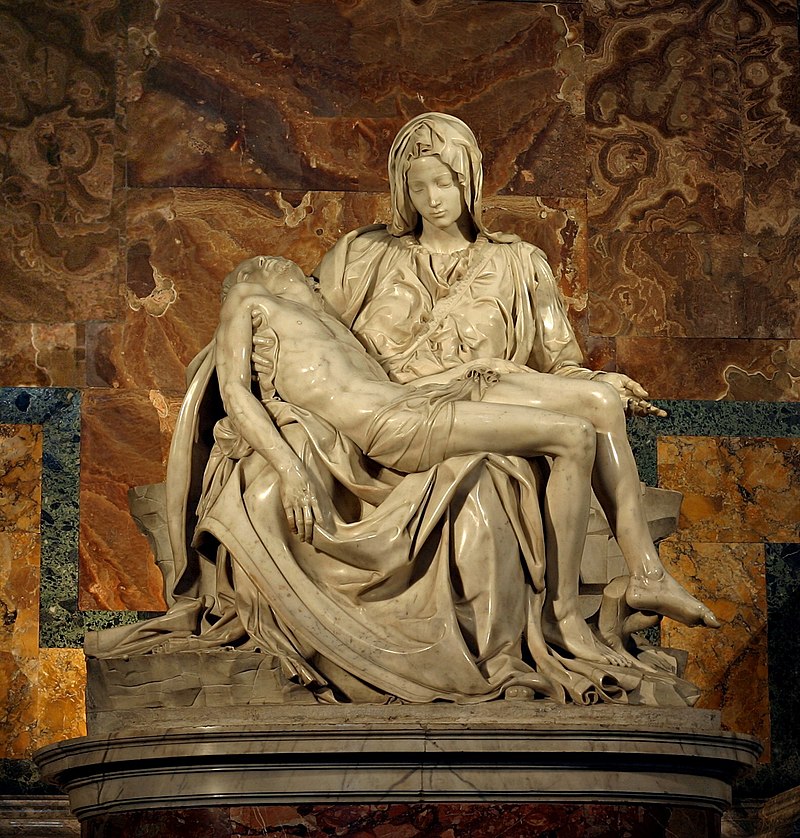
800px-Michelangelo's_Pieta_5450_cropncleaned_edit

Image:Michelangelo's Pieta 5450 cropncleaned.jpg), CC BY 2.5, https://commons.wikimedia.org/w/index.php?curid=3653602 ( Source : Google )


There was a young man who loved to draw. He made sketches and paintings and often played with stones and carved something out of it but never truly satisfied. So he secretly dissected cadavers in morgues in the dead of night to learn about how muscles worked and about human anatomy. He did this to learn how to sculpt very realistic human forms from solid marbles.

During his time the dissecting of cadavers was considered a crime and a desecration of human body but the morgue keeper saw in him an aspiring artist and let him do it in secret. He got up very early before dawn to inspect a piece of marble in the quarry to see how the first light of the sun played on the stone to reveal its imperfections so that he could select the very best piece for his sculpture he was planning to make.

Slowly his fame as an artist and sculptor grew so he was given the task of decorating the walls and the ceiling of the Sistine chapel by the Pope that he painted centuries ago. He painted the ceiling with fantastic art hanging upside down for hours at a time in a hammock in dim oil lamp straining his eyes and suffering excruciating pain in his body while doing so but he continued.

Now you all know who he was. He was Michelangelo di Lodovico Buonarroti Simoni who lived so long ago but his paintings and sculpture can be seen at the Vatican today that is so impressive. You will strain your neck looking up to see all the details of his art in the Sistine chapel so they will offer you a mirror.

I could only look at his masterpiece called Pieta that you will see on your right side as you enter the main door of the Vatican in total admiration and wondered how he could chisel out of solid stone the Pieta so perfectly that you could see the veins in the hand of Christ and the glow in the face of Madonna. What tools he had to achieve such perfection that is hard to believe unless seen? It was not easy for him. He practically became blind straining his eyes in the dim oil lamp and soot hanging upside down suffering pain and discomfort and gained little for all his effort but he left behind a legacy that endures through centuries.

Do people have to suffer so much to make a legacy? All the great names of our century and the past have made personal sacrifices like Michelangelo. Some have been jailed like Mandela for 28 years while others were shot like Martin Luther King who only wanted equal human rights for all. Abraham Lincoln was killed because he ended slavery. The history book is replete with names of people who made great personal sacrifices but left an enduring legacy for the generations to come.
We the common people are not like them because we fail to rise above our commonality and show our mettle but can we not also strive to leave behind something that people will admire for generations?

There was a young man in China who married a woman he loved but suffered the disapprobation of the community for some reason so he went away with his young wife and lived in a secluded mountainous area where he cultivated some land to grow his food and took care of his wife. She had to go down the steep mountain slope every day to fetch water from a valley stream and struggle up the slope with the burden but one day she slipped and fell hurting herself.


Source : Google photo of 6000 steps cut into the mountainside for his wife

So the young man started carving out steps on the solid rock of the mountain side and kept at it with his hammer and chisel for many years so that his wife would not fall again. Now people look at those steps and wonder at the dedication and love of this man for his beloved who left behind a great legacy although he did it for his wife only.

So common people may also have uncommon love and dedication like that simple Chinese man and do something extraordinary with their lives.


Source : Google photo of the mini Taj Mahal built for his wife

A man in India has built just by himself and a mason toiling under the hot sun month after month, year after year a mini Taj Mahal where he has buried his wife. He became very old and feeble but would not quit until the mausoleum for his wife was complete and he did it alone with no help from anyone. If that is not dedication and love then I do not know what is? He left behind a legacy that is still unmatched. He was just a retired postman.

There is a lady in England who has just by herself built massive stairs and retaining walls at the side of a cliff so that one can go down to the beach. Imagine a frail old woman with such dedication and determination? So  common people too may leave a legacy behind.

By legacy I do not mean 1500 pairs of shoes that a woman in the Philippines collected as an extreme example of conspicuous consumption or a dictator using public money to build a 1000 room palace with gold bathtubs in Bucharest while people remained poor and jobless. By legacy I mean something noble and glorious that is the result of extreme sacrifice.

I remember fondly our professor of agronomy during our college days in India who was so nice and so great that we all were in awe of him and mourned his sudden death due to heart attack but he too left behind his legacy in his students who became great agronomists later.

I remember our sweet librarian who always welcomed me whenever I was visiting the campus and who was so delighted like a child when I gave her a copy of my Ph.D dissertation for the library. She too left behind the legacy of a kind lady who gave me a part time job so that I could pay for my tuition. Such great men and women have all passed away but fondly remembered by those whom they helped.

I think every person has a seed of greatness in him or her that lies dormant for most people because it never gets the chance to grow due to many reasons some beyond their control.

I also think that doing noble work without asking for anything in return is what makes people great. A teacher remains poor but some of his students become scientists and great scholars. I remember a movie where an old primary school teacher was dying of cancer after retirement but one day many of her former students showed up with flowers and gifts .She clearly recalled all their names and how well they did in her class or not that brought tears to her former students among them the governor of the state and prominent personalities.

We all owe it to the next generation to leave behind something for them that they will benefit from. That is the true meaning of legacy.

In our own small insignificant ways we all are capable of touching the lives of others that leaves an impression, an indelible impression that propels them onto achieve greatness in their own time.

So be generous toward those who need your help. Be compassionate toward those who suffer because they are born poor and unfortunate. Be humble and selfless so that ego does not make you a mean and uncaring person. After all how you have lived your dash is more important than how long you have lived, isn’t it?

Michelangelo said “The greatest danger for most of us is not that our aim is too high and we miss it, but that it is too low and we reach it.”

Note :  My blogs are also available in French, Spanish, German and Japanese  languages at the following links :

tumblr posts    
Blogs in French
Blogs in Spanish
Blogs in German
Blogs in Japanese
Anil’s biography in Japanese
Anil’s biography in French.
Anil’s biography in English.
Anil’s biography in Spanish.
Anil’s biography in German
http://achtrjee.wixsite.com/mysite/blog

Subscribe

Wednesday, April 25, 2018

Price they paid for love

Price they paid for love

Synopsis : We could all learn something from the sacrifices some people make for their love for each other as Anarkali , Laila and Juliet did so long ago and became a legend.


salim-and-anarkali

Source : Google photo of a painting of Anarkali and Salim

Have you ever heard of Anarkali? Chances are you have not so today I will write about a very beautiful girl called Anarkali whose very tragic life is a testament to what some people are asked to sacrifice just because they fell in love.

Anarkali means pomegranate blossom so it was most likely her nickname but I am sure she had a real name and was a real person who lived in the court of the Mughal Emperor Akbar in the 16th century India. Anarkali was not a cheap prostitute to please others because she belonged to the harem of Akbar so she must have been chosen for her beauty and her talents.

All Muslim rulers and their princes kept their harems full of women who were literally kept as slaves because they had no liberty and could not see other men. They were jealously guarded by the armed guards 24 hours of the day and killed any intruder who was not authorized to visit the harem. To make sure that the guards did not have funny ideas that could lead them to some indiscretions on their own, they were castrated so they were eunuchs just like in the forbidden palace in Beijing in the olden days.

These beautiful but helpless women were purchased from the slave traders who kidnapped them from many parts of the world and they were traded as a commodity and not as a human being. The king could never marry them because as Muslims they were only allowed 4 wives so they were kept as concubines .

Now Akbar himself was no stranger to love as the history shows because he married a beautiful Hindu princess called Jodha Bai from Rajputana ( Rajasthan now) and made her the Queen of India and loved her dearly and fulfilled all her wishes but he also kept other wives and a harem full of pretty women like Anarkali to boot. It was the standard practice at that time so many rich people in power did the same and sired numerous illegitimate children from their concubines that created its own problems later on.

But let us focus on Anarkali . She saw the crown Prince Salim and fell in love at once with him as did the prince himself. Anarkali was not just a beautiful woman like any other but she was a great dancer, musician, educated and talented in many arts and calligraphy but she broke the taboo being in the harem of the king so Akbar got very angry with the lovers and forbade any further contact between them so prince Salim rebelled and took a large number of troops sympathetic to his cause to give battle to his father.

The outcome of this rebellion by the prince was a foregone conclusion because the loyal army of Akbar easily defeated the rebels and the unrepentant Salim was brought to his father in chains to face the music so to speak. Akbar was still very angry with his son so ordered him to be blown away by canon fire so the hapless prince was tied up to a post to face the canon that his father himself lit.
But a General sympathetic to the cause of the prince turned the canon at the last moment so the ball went in a different direction saving the life of the prince. By this time the anger of the king had abated somewhat and he realized that the prince was after all to be the next king. Perhaps the queen mother was also able to convince him to cut the prince a bit of slack and go easy on him.

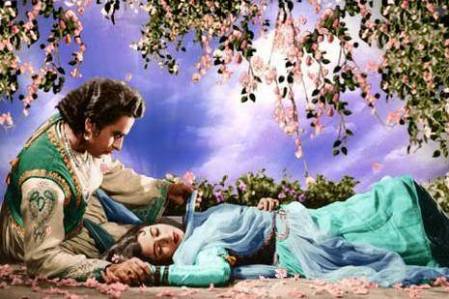
But Akbar was still angry with Anarkali who had to be punished. A crown prince could never marry a commoner like her so he ordered her to be buried alive but that was probably just in the movie made in the sixties called Mughal e Azam where it was shown that secretly a tunnel was dug under the tomb to take out Anarkali that way. Indians did not like sad endings in their movies so were relieved when Anarkali escaped her death.

Some say that she was exiled by the King to Lahore where she spent the rest of her life on a small pittance and piety which was indeed a sad ending of such a beautiful girl who was so talented. She was punished for loving the wrong person but the history shows that prince Salim who later became the king never forgot Anarkali and built a nice mausoleum where she is buried in Lahore. People place flowers on her grave and wish all loves are so priceless and exemplary.


                                Source : Google photo of the grave of Anarkali in Lahore

The grave of Anarkali in Lahore that has Arabic inscriptions identifying it as her grave. The painting below shows she being buried alive by the order of the king .
(The tomb is accessible to the public in Lahore. Anarkali was a legendary favorite in the harem of Emperor Akbar. Apparently she had fallen in love with Akbar’s son Prince Salim . One day Akbar saw her return Salim’s smile and as a punishment she was buried alive in 1599 – Source  Wikipedia)


anarkali
Source : Google photo of a painting depicting the execution of Anarkali

Known for his temper ,the mighty king Akbar quite likely gave the order so that she was executed this way but her place of execution is not known although probably in Agra.


There is another tragic story of unrequited love that I write about here called the story of Laila and Majnu.


maxresdefault (1)


Source : Google photo of Laila and Majnu

The Story:


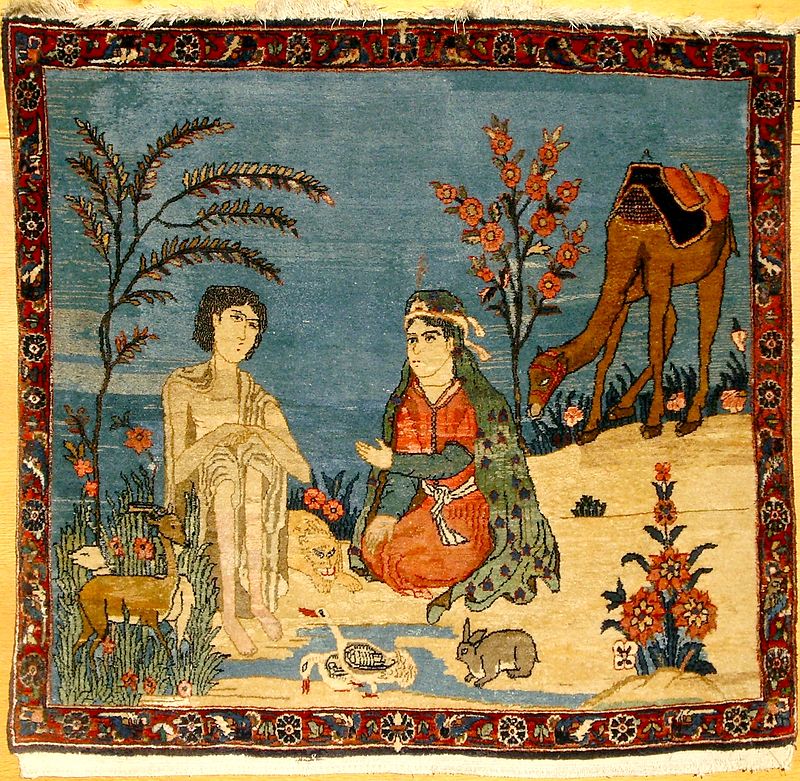
Qays ibn al-Mulawwah fell in love with Layla al-Aamiriya. He soon began composing poems about his love for her, mentioning her name often. His unselfconscious efforts to woo the girl caused some locals to call him "Majnun." When he asked for her hand in marriage, her father refused because it would be a scandal for Layla to marry someone considered mentally unbalanced. Soon after, Layla was married to another noble and rich merchant belonging to the Thaqif tribe in Ta'if. He was described as a handsome man with reddish complexion whose name was Ward Althaqafi. The Arabs called him Ward, meaning "rose" in Arabic.

When Majnun heard of her marriage, he fled the tribal camp and began wandering the surrounding desert. His family eventually gave up hope for his return and left food for him in the wilderness. He could sometimes be seen reciting poetry to himself or writing in the sand with a stick.
Layla is generally depicted as having moved to a place in Northern Arabia with her husband, where she became ill and eventually died. In some versions, Layla dies of heartbreak from not being able to see her would-be lover. Majnun was later found dead in the wilderness in 688 AD, near Layla’s grave. He had carved three verses of poetry on a rock near the grave, which are the last three verses attributed to him.

“ I pass by these walls, the walls of Layla
  And I kiss this wall and that wall
  It’s not Love of the walls that has enraptured my heart
  But of the One who dwells within them  ”

800px-Keshan_01


Layla visits Majnun in the wilderness; Indian watercolour held by the Bodleian Library  (Source :By Arie m den toom - eigen werk / selft made, CC BY 3.0, https://commons.wikimedia.org/w/index.php?curid=3508955)


Many other minor incidents happened between his madness and his death. Most of his recorded poetry was composed before his descent into madness.

It is a tragic story of undying love much like the later Romeo and Juliet. This type of love is known as "virgin love" because the lovers never marry or consummate their passion. Other famous virgin love stories set in Arabia are the stories of Qays and Lubna, Kuthair and Azza, Marwa and Al Majnoun Al Faransi, and Antara and Abla. This literary motif is common throughout the world, notably in the Muslim literature of South Asia, such as Urdu ghazals.

The story of Layla and Majnun was known in Persia as early as the 9th century. Two well known Persian poets, Rudaki and Baba Taher, both mention the lovers.
Although the story was known in Arabic literature in the 5th century, it was the Persian masterpiece of Nizami Ganjavi that popularized it dramatically in Persian literature. Nizami collected both secular and mystical sources about Majnun and portrayed a vivid picture of the famous lovers. Subsequently, many other Persian poets imitated him and wrote their own versions of the romance. Nizami drew influence from Udhrite love poetry, which is characterized by erotic abandon and attraction to the beloved, often by means of an unfulfilled longing. Other influences include older Persian epics, such as Vāmiq u 'Adhrā, written in the 11th century, which covers a similar topic of a virgin and her passionate lover; the latter having to go through many trials to be with his love.

In his adaptation, the young lovers become acquainted at school and fell desperately in love. However, they could not see each other due to a family feud, and Layla's family arranged for her to marry another man. According to Dr. Rudolf Gelpke, "Many later poets have imitated Nizami's work, even if they could not equal and certainly not surpass it; Persians, Turks, Indians, to name only the most important ones. The Persian scholar Hekmat has listed no less than forty Persians and thirteen Turkish versions of Layli and Majnun." According to Vahid Dastgerdi, "If one would search all existing libraries, one would probably find more than 1000 versions of Layli and Majnun."
In his statistical survey of famous Persian romances, Ḥasan Ḏulfaqāri enumerates 59 ‘imitations’ (naẓiras) of Layla and Majnun as the most popular romance in the Iranian world, followed by 51 versions of Ḵosrow o Širin, 22 variants of Yusuf o Zuleikha and 16 versions of Vāmiq u ʿAḏhrā.   ( Source : Wikipedia )

There are many such stories of unrequited love found in many countries that lovers still shed their tears upon like that of Anarkali  or Romeo and Juliet. I have seen the house of Juliet in Verona , Italy but not the grave of Anarkali in Lahore.


The house of Juliet in Verona, Italy


The tomb of Juliet in Verona

Source : Google photo of the house and tomb of Juliet in Verona, Italy

What makes these stories remarkable and eternal is the tragedy that befell the lovers that destroyed them and set an example of how great their sacrifice was and how steadfast they were in their love for each other. Can you imagine the agony of a young and beautiful girl being buried alive just because she was in love? Can you feel her pain centuries later?

They set the bar for love very high indeed.


Note :  My blogs are also available in French, Spanish, German and Japanese  languages at the following links :


tumblr posts    
Blogs in French
Blogs in Spanish
Blogs in German
Blogs in Japanese
Anil’s biography in Japanese
Anil’s biography in French.
Anil’s biography in English.
Anil’s biography in Spanish.
Anil’s biography in German
http://achtrjee.wixsite.com/mysite/blog

Subscribe

Tuesday, April 24, 2018

International students

International students

Synopsis: Studying in prestigious universities abroad remains a dream of many students because only a few get admitted while others get discouraged due to high cost. I look at the growth of private universities that are being run as business that cater to the rich but leave behind many brilliant students who just can’t afford the cost.


international_students

Source: Google photo

Now we see more and more students who study abroad for their higher education giving rise to a multi-billion dollar growth in the education sector. Some universities are so sought after that they reap huge benefits in revenues from foreign students and advertise constantly to lure more students to their campus while others simply open up new campuses overseas that offer the same curriculum or tie up with other universities in the home countries of the students with exchange programs or credit to courses.

This has made it easier for the foreign students to attend the universities of higher education in their own countries where they set up campuses or have intra university tie ups.

Here in the Philippines I have known that the Cornell University in the USA offered its students to do their research for dissertation in the Philippines because of such tie ups with the university here and a friend of mine brought students from the Philippines to his university in the USA to earn some credits in some courses through such exchange programs.

When I was a graduate student in California a long time ago, I was frequently asked by the Americans if I was an exchange student and were very surprised when I said that no one was exchanged for me. I was on my own and worked part time to meet my expenses.

This trend of studying abroad has picked up considerably lately because the universities actively seek foreign students who bring in huge revenues to them and help the universities an increase in their prestige, popularity and rankings. Not all the foreign students return home after their graduation so many opt for staying; getting a residency permit that eventually may lead to their acceptance as citizens.

They get jobs, marry and settle down in their new country but there are many who return home and find jobs there. I did not return home after my graduation from California University but I did not stay there either because I opted for the international life I chose and enjoyed.

I want to focus today on why so many young people choose to go abroad. I also want to look at the means of getting there that has changed dramatically since I was a student so long ago.

During my time there were only very limited options available to poor students like me. One was to seek a scholarship from a foreign university that paid for all or most of the expenses including the airfare or sea fare. The second option was to go as independent using own resources that was a much harder option because the cost of such education was high and beyond reach of poor students or their families.

There was a third option that I chose because I was lucky to be chosen as a volunteer to work in Vietnam in an agricultural team that paid me a small stipend that I saved meticulously for two years that then enabled me to go for higher studies in California. The part time job there helped meet my expenses so I graduated with 50 dollars still in my pocket and a bright future in Algeria but you can say that I was lucky and daring.

To be jobless and moneyless after graduation in America is a very difficult proposition for a foreign student in there because there is absolutely no one to help you out even temporarily and there is no family to support you like back home. So many foreign students who intend to stay there after graduation start looking for jobs frantically even before graduation and apply for the resident permit that allows them to work. In other countries like Australia, they make it easier for the foreign student to get the necessary permits so that they can stay and work and eventually get the citizenship because they want new graduates who have brought in new skills that the country needs.

When I was young, our parents could not afford to pay for my foreign education so I had to find a way to do it on my own and I suppose it was true of most families so going abroad for studies was a big deal in those days. Only those who got scholarships could do it but such people were few in numbers.

Now the economic situation has improved dramatically for the ordinary middle class in many countries like China and India so many families now can afford to send their children abroad by saving for such huge expenses for a long time.

The question to ask is why students opt to go for higher studies abroad in the first place when there are many good universities at home? The answer is the prestige of such education that gets them jobs easily and the opportunity to settle in a new country where they can earn more and live the life with some measure of prosperity. That seems to be the ultimate goal of higher education for most if not all people.

People do not get education just because they want to be educated but they do it to learn some marketable skills that are in great demand somewhere with good pay and a promise for a better life than at home.

The older generation of our parents and grandparents was content to find a job in their home country and raise their family on meager salaries because they could not imagine sending their children abroad. It was simply out of the question. They expected their children to get a good education and find a job near them just like everyone else and be happy with the mediocre life of a small town person with small salary because going abroad was for the rich people and not the ordinary poor folks.

The next generation that came along during the era of rapid technological advance and the age of internet, free Skype and instant messaging service worldwide has now become more audacious than the previous generation and seeks opportunities on-line and finds them.

You can get admitted to a good university somewhere on-line or find a job on line and get interviewed on line through Skype. You can apply for scholarships on line and can search the internet for all the scholarships available worldwide to seek the one you want. You can get the response also on line and quickly. This kind of advancement in technology was unheard of during the previous generation that has allowed many young people to find ways and means to go abroad and study in a school of their choice.

I did it in the old-fashioned way before the era of internet and Skype so it was considered unusual by many at that time but it is no longer unusual anymore. Many are going and many more are falling in line to go by seeking work visas in the US because they have the education and skills that are in demand there although there has been some backlash now.

How the foreign students are treated abroad?  

Now I come to the sticky part of this issue when I see that some Indian students in Melbourne have been attacked by the local thugs who see them as undesirable aliens who must be beaten up because they are of dark skin etc. so racism is involved. In other countries the far right local politicians are saying that these foreign students of dark skins are taking away jobs from the locals and want to settle down instead of going back to where they came from etc. that encourages such attacks on them by local thugs. This sort of thing is not widespread but it gets headlines back home making other aspirants to think twice before going abroad.


An ancient tradition:

Students going abroad for studies they could not get at home is an ancient tradition dating back thousands of years. The University of Taxila and Nalanda in India had many foreign students thousands of  years ago. There was no visa and passport requirement in those days. Students just appeared at the universities and were admitted, housed and fed and taken care of by the sponsors who were the kings and queens or other rich people who saw the merit in doing so. The student could stay for many years if he so desired and find employment easily later. Many returned home to become teachers themselves. The destruction of such centers of advanced learning in the hands of Muslims is another story that is out of the scope of this blog here.


Hiuen Tsang came to India from China on foot crossing the mighty Himalayas to study at Nalanda centuries ago such was the fame of Nalanda that reached China. Taxila was even older than Nalanda meaning before Christ. They had massive libraries of hand written books and scrolls in parchment or on palm leaves that were systematically burned by the fanatic hordes of Muslims who burned the universities to the ground but it shined as a center of learning for a very long time before that.
The university at Timbuktu in Mali was also very famous where many students from around the world attended long ago but nothing remains now except some parchments of their once massive library that is slowly crumbling to dust.

The modern era:

We now come to the modern age of learning when we have seen a rise in the number of centers of higher learning everywhere phenomenally in the last century first due to endowments making land grant colleges possible in the United States that has served as a model for other countries to do the same. We have seen the rise in the numbers of private universities everywhere that are run purely as business where students are trained in skills in demand but where the students are required to pay high fees for their education.


The high cost of education in some countries now makes students indebted because they take student loans they pay back for years to come. Some female students get into prostitution to earn to pay for their education but the foreign students are spared because either they have sponsors or financial assistance from the university. I was denied financial assistance by my college because they did not believe my argument that I saved 600 dollars in my bank account to pay for my return ticket to India.
We have seen a rise in the colleges and universities that are funded by the religious institutions like Vatican or other religions thus we have the Benares Hindu University or the Aligarh Muslim University in India, Catholic universities in the Philippines and the United States where the religion is emphasized.

But long ago the tradition of non-denominational centers of learning based on pure knowledge in science, mathematics, astrology, logic, astronomy, economics and many such subjects was born in India that welcomed anyone irrespective of caste, religion, race or ethnicity so students came from  everywhere to learn from the masters there.

Now many see higher education is a business to make money so they invest in massive buildings, staff and laboratories and pay good salaries to all staff. Students are housed in modern dormitories and have all the facilities to live on campus nicely and get the education they want. They just have to pay the price that rules out poor students who have to go elsewhere.

The advances in technology now allows a professor to teach a class through Skype in another country or another place far away and the students now go to their classes carrying laptop computers that they use for instant searches of reference materials they need.

However, for most of the poorer countries where they lag behind in the development and use of such technologies, students have to contend with very limited resources available to them. I see it here in the Philippines where the libraries are so poorly stocked of books they are supposed to keep that students borrow the book to photocopy at great expense adding to the financial burden on their parents.

In numerous countries worldwide, the dream of a poor student to get higher education just remains a dream while for some, getting any sort of education especially for girls remains a goal that they find hard to achieve. I have written about Malala Yousafzai of Pakistan who is fighting hard for the education of all girls everywhere but it is an uphill battle for many.

I envy the countries in Europe where higher education is guaranteed by the state to anyone who wants it, where all expenses are paid by their government and where everybody is encouraged to be educated. The governments there invest heavily in the education sector by subsidizing everything or pay for everything so that everybody has a chance to get education. But in countries where education is a business, students get into serious debt problem as a consequence.

I see the future not in rosy terms for those less fortunate than others who also want to go abroad for studies because of high cost and a lack of sponsorship so what is the alternative? The education should not create the elite class that then reaps all the benefits leaving behind the vast majority that ends up just dreaming.

Is that the only way a country makes progress?


Note :  My blogs are also available in French, Spanish, German and Japanese  languages at the following links :


tumblr posts    

Blogs in French
Blogs in Spanish
Blogs in German
Blogs in Japanese
Anil’s biography in Japanese
Anil’s biography in French.
Anil’s biography in English.
Anil’s biography in Spanish.
Anil’s biography in German
http://achtrjee.wixsite.com/mysite/blog
Subscribe