Wednesday, January 16, 2019

Farming and capitalism

simply-sapa-water-season-in-sapa-banner_0

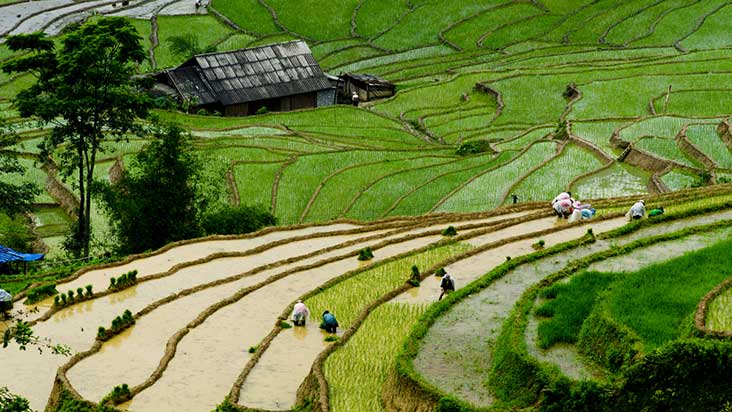
Source : Google photo of rice fields in Sapa, Vietnam

Synopsis : Of all types of occupations, I think farming is the most difficult and laborious one. Most people in this world who live in towns and cities and are not farmers  have no idea what it takes to grow food that they buy at the supermarket. They have never been to a farming community to see for themselves how hard the farmers work and under what conditions. Many have never seen a rice or wheat plant.


Once someone told me that she asked a simple question to her friends who were all Americans . The question was How many teats a cow has. Some one said five, some said three and others said two but no one got it right because they had never been to a farm and seen a cow up close. This is not an isolated case.

An American woman who had never seen a rice plant asked me how we got the green rice that we prepared for her and did the green rice come directly from the plant? We were amused at her ignorance and explained that we used a food color to make it green.

We take our food for granted and never know what it takes to produce them because people who never do any physical work except typing using a key board in an air conditioned office do not have any idea of the sheer work required to grow the food that we then buy at a local store so today I wanted to write something about the farmers of this world who feed us but are not given due credit or understanding of their hard life.

Farming of any sort is hard work but rice farming takes the cake when it comes to sheer back breaking hard work. The farmer has to first prepare the land meaning he has to plow the field full of water and level the paddies with a plank or a leveler. Then he has to get up at 4 or 5 am and pull the seedlings from the seedbed and tie them in bundles and distribute the bundles throughout his fields which may contain several paddies.


Source : Google photo of rice seedlings transported to fields

Then comes the hardest part of all. The planting has to be done manually so hundreds of men , women and even youngsters start planting the seedlings one at a time in straight rows by bending from waist down in thick mud of the paddy that may be anything but clean. It may have sharp objects in the mud, leeches or worms but they must keep at it the whole day under the scorching heat of the tropics with only short breaks for lunch.

At the end of their day their whole body aches from head to toe due to this hard work that they must repeat until all the fields are thus planted. There are mechanical rice planters used in some countries but most of the poor rice farmers can't afford them so it is still done manually. Then comes weeding by pushing a weeder between the rows of plants hour after hour, day after day and week after week until the job gets done. Then comes spraying the entire field to protect the plants from insect pests . This means carrying a heavy knap sack sprayer and walking through mud under the sun.

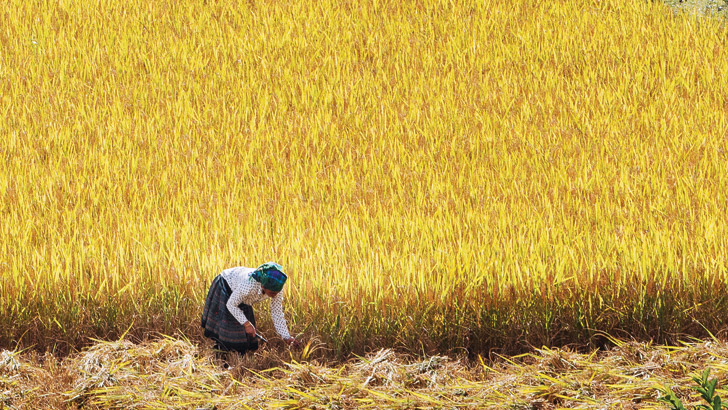
Then comes the harvest after 120 days or so that is also a back breaking job because the plants have to be harvested by hand and carried to a thresher to separate the grains from the plant. If you have never done such work in your life then you should know that it is a dirty job that will make you very itchy all over your body. I know because I have done such work myself when I was doing my field research here in the Philippines and Vietnam.
dsc01632

Source : Google photo of rice harvesting in Asia

So don't be fooled by the emerald sea of rice paddies planted so neatly and the golden mature fields that you will see from your car if you happen to pass through the rural areas. It takes a great deal of hard work to produce the grains you call rice and no they are not green from the plants.

My topic today is farming and the capitalistic system in many countries where small farmers are disappearing giving way to large corporations that operate millions of hectares of fertile land and use massive farm machineries that do the land preparation , planting, weeding and all other work to grow the crops and harvest . There you will see many air conditioned machines operated by a few that cover a lot of ground in a single day. Only large corporations have a lot of money to buy the large machines that do the job so efficiently leaving the small farmers to their own resources that are so limited.

I will now tell you how the capitalistic system pushes out small farmers in favor of large corporations that take over the production of food on a large scale. In the United States less than 3 percent of the total population of the country is engaged in farming hence the ignorance of the 97% people who say cows have 3 teats or less. But there was a time when this was not so. May be one hundred years ago there were many small farmers but they did not have the resources the large companies have so they were gradually forced out.

This is happening in many countries where the mechanization is replacing manual labor in the fields even in some rice growing regions. One rich businessman started to farm in Brazil investing billions of dollars and thought that complete mechanization of rice crop will give him great profit but he was wrong. His expensive machines bogged down and rusted in the deep mud of the rice paddies so after suffering great loss, the whole project was abandoned.

Here is a story that is quite interesting so I will mention it here. There was a prosperous farmer somewhere in the United States who had over 600 acres ( they still use acres there) that he cultivated well and was known as a progressive farmer but one day he died leaving his widow and the house and a lot of farm related debt. The poor widow did not know a thing about farming so the fields remained fallow generating no income for her. So she failed to pay her taxes that prompted the government to take away a part of her land  as recompense every year until nothing was left of once prosperous farm.

When she was left with nothing but only the house she lived in, they threatened to take that as well and put her on the street so a plea was made to the governor to  save her and give her the reprieve she so badly needed so that was granted. I wonder what would have happened if she was white but that is another issue altogether.

The capitalist system is based on making money at any cost so it disregards the plight of small farmers and leaves them to fend for themselves which they find hard to do but the tax collectors are relentless as I mentioned about the black widow above so they sell their land and try to find other jobs. This is easier said than done because jobs are scarce for poorly educated farmers who have no other skills than farming.

The small scale dairy farmers or those who raise chickens or hogs face the same problems as other small farmers and are often subject to exploitations by the rich corporations that ask them to raise chickens or hogs for them and pay them a low price in return to maximise their profit margins. Ask any chicken farmer in Arkansas how they fare and they will tell you their sad stories of exploitation.
                   
These rich corporations then employ immigrant women from the poor communities and pay them minimum wages to de feather the chicken and gut them whole day. Gutting a chicken is a very hard job that these poor women do for low wages and can't complain if they get nerve damage and swollen and very painful hands. When women can't work any more or slow down, they are summarily fired.

I see the same kind of exploitation here in the Philippines  where the rice farmers borrow the money from the rich Chinese mill owners to buy the seeds and fertilizer etc. to grow their crop which they are required to sell to the Mill owner who deducts all the loans plus the interest leaving the farmer as poor as before so the cycle of exploitation continues year after year with no improvement in the life of a poor farmer.

I was shocked when the beautiful cotton the Malian farmers grew at a great cost and very hard labor was bought by the Cotton ginning mills at a low price. They did the same thing and deducted all the loans given to farmers plus interest and said that the cotton was of poor quality and dirty etc. so this sort of exploitation goes on everywhere.

I had earlier written a blog on how the rich landlords in some part of India exploited the poor share croppers that led to a revolt and a farmer called Man Singh emerged as the Robin Hood to save the farmers from abuse.But guess what happened to Man Singh? One day he was riddled with 64 bullets by the police who hunted him day and night.

In India many farmers who are heavily indebted to the money lenders commit suicide out of desperation so now some politicians find it convenient to pass the farm bill that forgives the debt or reduces it because they want farm votes. They should have gone after the moneylenders who use usury to make money and put them in jail but they are rich so nothing happens to them.

I still favor a government that does not tax poor farmers and makes farm loans available to them. This is the approach the Government of India has taken which brings a great relief to farmers who number in hundreds of millions. The new government there is building farm to market roads, bringing electricity to most of the villages, giving them subsidy for diesel fuel to run their pumps for irrigation, buying the farm products at an assured rate that is then distributed to all Indians at a subsidized rate.

But subsidy at such a grand scale costs billions of dollars in India that has to come from other sources of revenue. Poor countries that can't afford subsidies leave the poor farmers to the loan sharks and unscrupulous money lenders.

The farmers are the salt of this earth. They grow the food we eat everyday. Without them the country will starve or will have to import  food from somewhere else so the farmers need all the help they can get. Any system that exploits the farmer puts food production in danger. Any country that favors rich corporations to manage agriculture hurts the poor farmers who are not trained for any other job. In countries where more than half the population is engaged in small scale farming face serious challenges  to improve the lot of such farmers. That is where the exploitation of farmers is also rife.

The collective farms of the former Soviet Union was a failure because the farmers did not own the land so had no incentive to produce anything. They were paid poor wages but the collective farms were very inefficient and not very productive so it failed. The farmers must own their land to have the incentive to produce anything. The countries that have succeeded in implementing an effective land reform program like in Cuba have become self sufficient in food production.

As a country develops and where infrastructures are built, it helps the farming community in many ways that helps them grow more food that they can sell to buyers easily when the farm to market roads are built. Eventually the farming population in many countries will decline leading to more mechanization but it should not happen at the cost of making them destitute. That is the flaw in the capitalistic system.

If all the hard work to grow food is taken over my machines someday then it can only be a good thing but only if the farmers are given alternative to make a decent living in other jobs. That can only come from education and training . This is happening to some communities where the youngsters are not interested in farming so they try to get some education and skills that make them employable in other jobs.

Planting rice is a back breaking job. I know because I have done it.


Note :  My blogs are also available in French, Spanish, German and Japanese  languages at the following links :
tumblr posts  
Blogs in French
Blogs in Spanish
Blogs in German
Blogs in Japanese
Anil’s biography in Japanese
Anil’s biography in French.
Anil’s biography in English.
Anil’s biography in Spanish.
Anil’s biography in German
http://achtrjee.wixsite.com/mysite/blog

Subscribe

Thursday, January 3, 2019

How India feeds its poor?

Kids feeding

Source : Google photo of Indian children feeding program

Synopsis : Hunger has no national boundaries. It is found in every country but the number of hungry people varies from country to country and depends upon the national resources to fight hunger. There is no doubt that hunger is a global phenomenon that needs answers and concrete ways to fight it.

https://youtu.be/0w1qOjF4D1E?list=PLl_eHKzVOHet_Pc09P9E9fh2GDKcEieiH


This video of Karolina Goswami is an eye opener that shows hunger in most developed countries like Great Britain and the United States although their governments may not like the world to know that it exists in their countries. It is quite fashionable for the international news media to focus their attention on countries like India where many of the poor people live but they are not aware of  the government's effort  in fighting hunger in a big way and making great progress in reducing the number of people who often  go without food .

I was very impressed by the Director General of the FAO who initiated the World Food Program of the UN that feeds millions of very poor people in war zones and where the rains have failed causing famine like in Ethiopia or other parts . But the UN effort to feed the hungry is a stop-gap measure that helps the hungry but does not provide a long-term solution to the problem of hunger in the world.

That can only come from the national governments because they are mandated to take care of their poor people by making irrigation available to farmers who can then grow the food they need. The massive investment needed to upgrade the canals to bring water to the dry areas requires a long-term view of the agricultural development that includes new high yielding varieties of crops, making credit available to farmers for the farm inputs, better farm to market road network to bring the produce to the market to get a better price, making electricity available to rural areas  and farm mechanization .

In the so-called developed countries we see far more investment in their military hardware and the manufacture of such hardware for the export market and not enough to build schools in poor areas, school feeding program for the poor children or building shelter for the homeless so you will see poverty in areas that have been left behind by their national governments.

The movie called " The education of  little tree" is a movie to watch that shows abject poverty in the mountainous regions of the United States where very poor people survive by making bootleg whiskey and constantly run the risk of getting caught and suffer the consequences.

Karolina gives some statistics on the poverty and hunger in UK that will surprise you . I have seen how poor the Roma people in Italy are and how they try to survive there without any aid from the government there. The Romas also called gypsies are spread out all over Europe and suffer from the lack of job opportunities for them , little or no social welfare programs ,care and health benefits that other Italians enjoy, little or no education and most of all a  Europe wide  discrimination against them based on their race, skin color and subhuman status.

I see hunger here in the Philippines where people make desperate attempts to make a living and earn a little to survive but are often lured into drugs that has its consequences. The vast slums of Asia somehow shelter them but many go hungry and resort to desperate measures like petty thievery that later develops into other serious crimes.

I am not writing about the man-made calamities like war that makes people refugees and destitute. I am writing about peaceful countries where people are hungry because they are so poor that they do not have enough money to buy the food they need to survive.

The Green revolution in Asia  was started by a scientist called Dr. S.K. De Datta in the 1960s who was working at the International Rice Research Institute in the Philippnes. He is probably the most underappreciated scientist in the history of agricultural science. I wrote a blog called The unsung hero of the green revolution that you should read to know his contribution to fight hunger through the cultivation of high yielding rice varieties that made the Philippines self-sufficient in rice during the 1960s.

There were other such agronomists who made significant contribution toward reducing hunger and poverty in many countries where poverty and hunger go hand in hand. But ultimately it is the role of the national governments to take care of their poor.

So today I will write about how India has become an exporter of food grains through massive investment in research, development and extension of modern agricultural technologies to increase its food production to feed the whole nation. Yet there was a time when India had to import food from other countries.

I remember how Richard Nixon at one time put pressure on India to repay its debt to the United States and threatened to cut off the supply of poor quality wheat and sorghum to India under PL 480 when Indira Gandhi was visiting Washington. She calmly wrote a check of several billion dollars and wiped off the entire debt in one swift motion that surprised Nixon who privately hated her guts and called her names.

India also refused to accept the poor quality grains and started to pay serious attention to develop the agricultural sector to make the country self-sufficient. Prime Minister Lal Bahadur Shastri called the nation to go on a diet of less rice and wheat and more on corn so people responded. One can never underestimate the sacrifice people are willing to make for their country in the time of need. The massive investment in agriculture, rural electrification, loans to farmers, irrigation and mechanization were to make India a net exporter of food in the decades to come.

The Government now has stockpiled food in every district of the country where large warehouses stock the food like wheat, barley, rice, sorghum, corn. sugar, dal and various other things that are then sold to the public at a subsidized cost. Every family in India gets a ration card and gets a supply of subsidized food the quantity of which depends on the number of people per family.

I used to go to the ration shop near our house every month to buy rice, wheat and dal etc. that was a big help to the family in cost savings. This system still prevails although people of the middle class now tend to have smaller families than before and have better income . So it really helps the poor who are assured of food through the nationwide food distribution centers that are located in every community.

The government buys the grains from the farmers at an assured rate and supplies it to the warehouses all over the country in every district that are joined by rail but India is a rapidly growing economy that has developed the rail and road infrastructure that makes it easy to move large quantities of grains.

But those countries that have not been able to invest in their agriculture still face chronic shortage of food and have to import it from other food exporting nations at a great cost. They also have not been able to develop the infrastructure necessary to help the agriculture sector the way India has so crops may fail if the rains are not enough. Ethiopian famine scenes are seared into the memory of everyone although it was mostly manmade due to their incessant wars with Eritrea.

Karolina Goswami in this video shows how a private institution in India is feeding hundreds of thousands of school children daily and expanding their program to include more children in more states. Thanks to the massive feeding program of school children free of cost , the kids attend schools and do not have to go hungry.

Unknown to the world ,the Indian government also has a school feeding program on a much larger scale in many states where millions of children are thus helped. The Hindus and Sikhs feed thousands of people daily through their free food program in their temples and gurdwaras. There is a gurdwara here near our place where anyone can get a free meal everyday because it is a part of their religion to feed people.

The problem of hunger worldwide is not going away anytime soon so each country has to solve its own problem of hunger through the improvement of agriculture and animal husbandry. Giving free food to children helps them attend schools but it does not resolve the problem in a meaningful way so it is up to the governments to create jobs for them when they grow up and join the work force.

Rich countries that ignore their poor people should invest in their poor people who can be an asset. Cuba is not rich but takes good care of its people through free education and healthcare for everybody so I salute such countries that care for their hungry and poor. It also has enacted the most successful land reform program there.

Of all miseries of the humanity nothing is worse than hunger so learn from the Africans. In their villages they always share food with their neighbors who may not have enough so I admire their spirit and hope that we all learn something about the human spirit from them. Just watch the video I presented in the blog called The spirit of Africa where they joyously build a beautiful home for their neighbor in Burkina Faso.

Those of you who waste food everyday do not realize that collectively people throw away food that can feed millions worldwide so I do not appreciate anyone wasting food. I have seen a river of egg yolks draining into gutter when college students in California were throwing eggs at someone for fun. Restaurants and fast food chains throw away excess food at the end of a day into the garbage bins but would not share it with the hungry.

When mankind loses its humanity, it is left with a shell devoid of any feeling for the fellow beings.

Are we turning into machines ?

Note :  My blogs are also available in French, Spanish, German and Japanese  languages at the following links :

tumblr posts  
Blogs in French
Blogs in Spanish
Blogs in German
Blogs in Japanese
Anil’s biography in Japanese
Anil’s biography in French.
Anil’s biography in English.
Anil’s biography in Spanish.
Anil’s biography in German
http://achtrjee.wixsite.com/mysite/blog

Subscribe

Thursday, December 20, 2018

Raja Ravi Varma

5ef97df0bf64e7816bb164fc8d19a6c5

Source : Google photo of Raja Ravi Varma

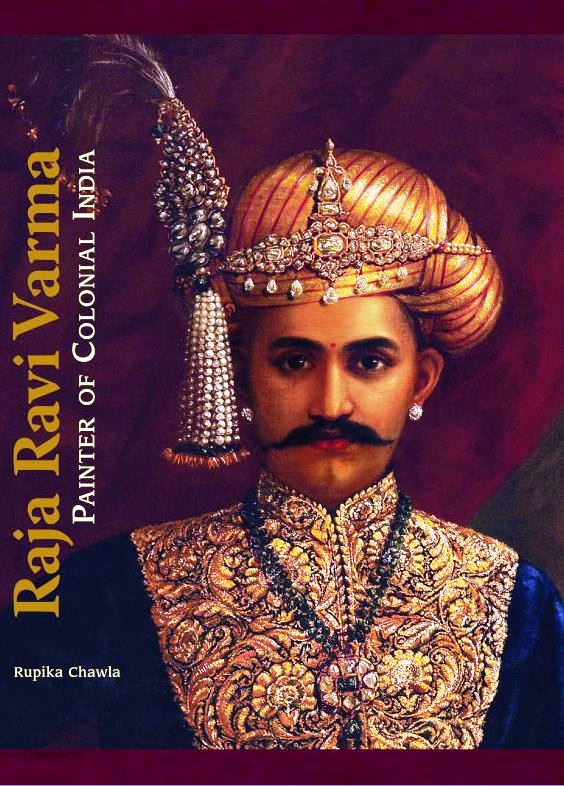
One of the famous artists of India is Raja Ravi Varma who is well known to the world. His dazzling style and color, use of middle class Indian women for his paintings and his depiction of religious figures of  Radha and Krishna puts him in a category all by itself.

Raja Ravi Varma (29 April 1848 – 2 October 1906) was a celebrated Indian Malayali painter and artist. He is considered among the greatest painters in the history of Indian art for a number of aesthetic and broader social reasons.

Firstly, his works are held to be among the best examples of the fusion of European techniques with a purely Indian sensibility. While continuing the tradition and aesthetics of Indian art, his paintings employed the latest European academic art techniques of the day. Secondly, he was notable for making affordable lithographs of his paintings available to the public, which greatly enhanced his reach and influence as a painter and public figure.

Indeed, his lithographs increased the involvement of common people with fine arts and defined artistic tastes among common people for several decades. In particular, his depictions of Hindu deities and episodes from the epics and Puranas have received profound acceptance from the public and are found, often as objects of worship, across the length and breadth of India. ( Source : Wikipedia)

Raja Ravi Varma was closely related to the royal family of Travancore of present day Kerala state in India. Later in his life, two of his granddaughters were adopted into that royal family, and their descendants comprise the totality of the present royal family of Travancore, including the latest three Maharajas (Balarama Varma III, Marthanda Varma III and Rama Varma VII).

Raja Ravi Varma was born M. R. Ry. Ravi Varma, Koil Thampuran of Kilimanoor at Kilimanoor palace in the erstwhile princely state of Travancore (present-day Kerala) into an aristocratic family that for over 200 years produced consorts for the princesses of the matrilineal Travancore royal family. The title Raja was conferred as a personal title by the Viceroy and Governor-General of India.


This is a painting by Raja Ravi Varma of his daughter Mahaprabha and her son.

I have put together his most notable paintings in the power point below for your enjoyment.


Link : https://1drv.ms/p/s!AmoX9W4gHulzki7_T6zURSgtTL0M

<iframe src="https://onedrive.live.com/embed?cid=73E91E206EF5176A&resid=73E91E206EF5176A%212350&authkey=AIQ_PZmZok0OSGo&em=2" width="402" height="327" frameborder="0" scrolling="no"></iframe>


This painting known as The lady with the lamp was wrongly attributed to Raja Ravi Varma and it was actually painted by another very good artist called H.R.Haldankar with the title Glow of hope. The painting above is a remarkable copy of the original done by an unknown artist in Kerala . It is painted on a bamboo screen and is very impressive so I bought it in a small town during our trip through South India.

I have included the original painting in the power point with the note that Raja Ravi Varma was not the artist of that particular painting. He painted Mona Lisa copying from the original so it is included as well because of its quality and resemblance.


Note :  My blogs are also available in French, Spanish, German and Japanese  languages at the following links :

tumblr posts  
Blogs in French
Blogs in Spanish
Blogs in German
Blogs in Japanese
Anil’s biography in Japanese
Anil’s biography in French.
Anil’s biography in English.
Anil’s biography in Spanish.
Anil’s biography in German
http://achtrjee.wixsite.com/mysite/blog

Subscribe

Monday, December 17, 2018

Jean Ferrat is a legend

arton23586

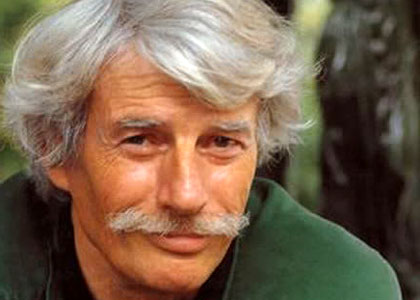
Source : Google photo of Jean Ferrat

Synopsis : This blog is about a well loved singer Jean Ferrat who left his imprint on the French conscience permanently though his songs and made them aware of all the injustices in the world but he also sang about the beauty and love.


                                               https://youtu.be/Ol2nMHF0A2s
                                       The most beautiful songs of Jean Ferrat


https://youtu.be/Otdj8WCdaac?list=PLeL3JfN-wERcCpuvVHBFfZoSih06dfNEo

                                   The most poignant songs that touch your heart

Ferrat was born in Vaucresson, Hauts-de-Seine, the youngest of four children from a modest family which moved to Versailles in 1935, where Ferrat studied at the Jules Ferry College. His Russian-born father (naturalized in 1928) was forced to wear the yellow star and deported to Auschwitz in 1942, where he died.

In the early 1950s, he started in Parisian cabaret. After that he avoided any particular musical style, but remained faithful to himself, his friends and his public. In 1956, he set "Les yeux d'Elsa" ("Elsa's eyes"), a Louis Aragon poem which Ferrat loved, to music. Its rendition by popular artist André Claveau brought Ferrat some initial recognition as a songwriter.

His first 45 RPM single was released in 1958, without success. It was not until 1959, with publisher Gérard Meys, who also became his close friend and associate, that his career started to flourish. He signed with Decca and released his second single, "Ma Môme", in 1960 under the musical direction of Meys.

In 1961, Ferrat married Christine Sèvres, a singer who performed some of his songs. She died in 1981 at age 50. He met Alain Goraguer, who became an arranger of his songs. His debut album, Deux Enfants du Soleil, was released that year. Ferrat also wrote songs for Zizi Jeanmaire and went on the road, sharing billing with her at the Alhambra for six months.

Nuit et Brouillard ("Night and Fog"), which followed in 1963, was awarded the Académie Charles Cros's Grand Prix du Disque and showed any topic could be put in songs.[2] Ferrat toured again in 1965, but stopped performing on stage in 1973.

In 1990, he received an award from the Société des auteurs, compositeurs et éditeurs de musique, (SACEM) the French association of songwriters, composers and music publishers.
In 2010, Ferrat died following a long illness at the age of 79. He lived in Antraigues-sur-Volane, a small village of not even 700 people in Ardeche.   ( source : Wikipedia)


I first learned of Jean Ferrat when I was in Algeria where I got to listen to his records at my friend Yves' house and was mesmerized by the richness of his voice and the beauty of his words that he sang with such great passion. Yves and I enjoyed many evenings listening to Jean Ferrat in stereo . Later when I visited Paris, a friend brought me to the FNAC record shop where I bought my first album of Jean Ferrat that I brought to India where my brother learned to appreciate his rich voice although he could not understand French.

I am so sad that he died in 2010 at the age of 79 because there will not ever be another Jean Ferrat. His songs live on in France and other French speaking countries . His songs gave life to the songs written by Aragon and has eternalized them the only way Jean Ferrat could.


                                                 https://youtu.be/7c8DBuPtGvU

This song called  Un air de liberte was sung during the war in Vietnam where I served for two years as a volunteer agronomist so I was particularly impressed by its message that all France understood and protested against the war there. He made the atrocities in Vietnam war known through his soulful songs. He sang about Pablo Neruda and about many who fought for freedom and suffered.


Here are the lyrics of the song and its translation
Un air de liberte


The wars of lies of colonial wars
It is you and your kind who are guardians
When you approve them in long news papers
Your pen signed thirty years of misfortune


The earth does not like blood or garbage
Agrippa d'Aubigné said it in his time
Your cause already smelled of rot
And it is this stink that you find pleasant


[Refrain]
Ah sir d'Ormesson
You dare to declare
That an air of freedom
Floating on Saigon
Before this city is called Ho Chi Minh City


[Verse 2]
Lying on the rails we stopped the trains
For you and your kind we were the vermin
On whom your police could hit without braking
But the streets resounded with peace in Indochina

Nous disions que la guerre était perdue d'avance
Et cent mille Français allaient mourir en vain

Contre un peuple luttant pour son indépendance
Oui vous avez un peu de ce sang sur les mains

We said that the war was lost in advance
And a hundred thousand Frenchmen were going to die in vain
Against a people fighting for independence
Yes you have some of that blood on your hands


Refrain]
Ah sir d'Ormesson
You dare to declare
That an air of freedom
Floating on Saigon
Before this city is called Ho Chi Minh City


[Verse 3]
After thirty years of fire of suffering and tears
Millions of hectares of defoliated land
A futile genocide perpetrated in Vietnam
When the cannon is silent you continue


But look at you one morning in the mirror
Patron du Figaro think of Beaumarchais
He jumps from his grave by making a face
The masters still have the soul of a valet 

I love Jean Ferrat because he sang against the cruelty of war and the sufferance of people under dictators of this world. He was an activist and brought awareness of war and misery through his songs. His own father was executed in Auschwitz by the Nazis so he knew all about suffering.

I listen to his songs from time to time and think of all that has changed since I first heard Jean Ferrat in Mostaganem in 1971. Yves has disappeared and is lost to me. Our mother's house in India has been sold and I do not know what happened to my Jean Ferrat LP records and the stereo. I have become old and live in a different country now. Jean Ferrat himself has died reminding us all that nothing is permanent in this life. Like fallen leaves , we are all swept away by the wind of time but singers like Jean Ferrat will endure. His songs and lyrics are engraved in the heart of all who loved him and his music.


Note :  My blogs are also available in French, Spanish, German and Japanese  languages at the following links :

tumblr posts  
Blogs in French
Blogs in Spanish
Blogs in German
Blogs in Japanese
Anil’s biography in Japanese
Anil’s biography in French.
Anil’s biography in English.
Anil’s biography in Spanish.
Anil’s biography in German
http://achtrjee.wixsite.com/mysite/blog


Subscribe

Monday, December 10, 2018

Xenophobia


xenophobia-in-south-africa

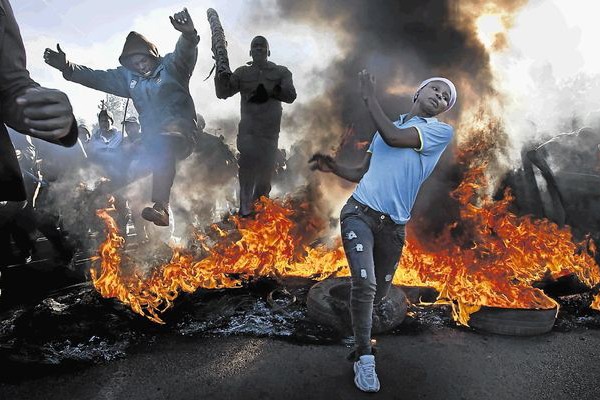
Source : Google photo of xenophobia in South Africa

Synopsis : Xenophobia is the baseless fear of other people who are not like you but it can be overcome with knowledge and understanding of others and their culture. Xenophobia is a crime against humanity.


I had a very interesting experience in Sicily once when I walked into a campsite by mistake near Messina that was for the Italians. Naturally they were surprised to see an Indian like me with a back pack just walk in so it was a first for them. They had never seen a real Indian up close. The children were the most curious and they swarmed around me and started chattering in Italian which I do not speak so all I could say was non parlare italiano but it did not stop them.

I noticed that there were a lot of kids of various ages starting from very young to may be a few in their teens who looked at me curiously while their mothers and grandmothers kept an eye on them  and sweetly smiled at me. There were no adult males that I could see anywhere so I figured it was a baby-sitting camp for the kids while their fathers went somewhere to soak up the night life or play with their steel balls.

I also noticed that they were extremely friendly and they all wanted to know all about me which was hard for me to explain but finally a teenage girl of about 12 or 13 years of age came forward and shyly said that she spoke a bit of English and could be of some assistance so I was greatly relieved because my Italian was going nowhere.

Once they learned that I was really an Indian from India and not a tribe found in the Amazon, their curiosity peaked because none had ever travelled anywhere and had absolutely no knowledge whatsoever about another country so it was a very first for them. I also noticed that they needed attention which was in short supply because the mothers and the grandmothers were busy chatting or doing other things.

So an idea came to me and I thought I could teach these kids a new game that was simple to learn and play. I explained to the teenager that this game was very simple. First we should all join hands and form a circle and then sit down on the ground. She explained this to the kids in rapid fire Italian so their eyes sparkled in excitement not knowing what will come next.

After they all sat down, I got a handkerchief and placed it secretly behind one unsuspecting kid and continued to circle them until I came to the kid, picked up the hand kerchief and hit him with it signaling that he was out of the game. If the kid found the kerchief before I could reach him, I was out of the game and he continued running behind the kids and placed the kerchief somewhere.

Now the kids understood the basics and were thoroughly excited so the game continued to the cheer of everybody. Now the kids understood that they were not supposed to look behind them to find the kerchief but no one told them that they could not feel so everyone started to feel behind them if there was a hand kerchief.

The game was fun and hilarious so the kids enjoyed it tremendously. The women looked on and smiled and one of them asked me to take off my shirt so I was a bit surprised but took it off and gave it to her. She had noticed a few missing buttons in my shirt so she brought out her sewing kit and put on new buttons for me very lovingly.

I was totally amazed at their friendliness and so welcoming nature. Needless to say I had never experienced such welcome in any foreign country except in Japan and in the United States. I should also include Algeria.

But the kids were not finished with me and asked me to play with them more but I did not have the unlimited energy of kids so I sat down under a tree in an easy chair and closed my eyes for a minute or so. Now the kids brought all kinds of food from their tents and started to stuff it into my mouth. Someone put cheese in my mouth while others put grapes or other things. I mean there was this tussle among them to feed me.

Finally it was time for me to move on so I got up and said good bye. Now the kids started to shed copious tears and pleaded for me to stay because they had opened their heart to me and would not let me go.  Believe me when I say that it was very hard for me to leave so I left with a heavy heart and still remember their tearful faces. When they knew that I had to go, they all started to kiss my cheek one by one.

I had to tell you this story here because my topic is Xenophobia or fear of strangers that I saw in many countries during my years of travel. It is perhaps the human nature that we are afraid of the unknown and are fearful of what the unknown may portend. You may be afraid to explore an unexplored cave deep underground not knowing the dangers that may lurk there. You may be afraid to try a new kind of food or a drink you never had before. You may be afraid of heights or haunted places.

But these are normal fears we all experience sometime or other. Xenophobia is the fear of people that is the strangest of all because it is not only based on ignorance; it is often deeply rooted in the culture where you come from. Xenophobia is based on a deep sense of malaise about strangers who are very different from you and who represent someone whom you had no previous experience with.

But those Italian kids were not xenophobic at all so they were very friendly to me and shed tears when I left. The older women accepted me with a smile and repaired my missing buttons. What then makes people xenophobic in some countries?

I used to think that the language barrier is a hurdle we all face when we travel abroad but those kids loved me even if I did not speak their language because I taught them a new game and played with them. So language is not necessarily a barrier as I learned in Japan.

The adults are far more complicated than the kids because at a certain age, the kids are very innocent but the adults are not so they start forming their own opinions about strangers and absorb all the negativity they receive from their friends and relatives who are xenophobic.

This is the dark side of us all that some politicians exploit to gain an audience and their support to gain a few votes. Hitler could put a huge crowd into frenzy while shouting from his podium reading from Mein Kampf who would then go on a rampage through the Jewish quarters and maul them physically. This was an extreme example of Xenophobia.

Remember the pogroms in Russia in the movie Fiddler on the roof? That was xenophobia. Often it is related to religious intolerance so Hitler said that the Jews were bad because they were not Christians so they should be literally eliminated but when the Khmer Rouge killed their own people in Cambodia in 1974, what do you call it?

It is also xenophobia based on political ideology so there are many kinds of xenophobia. I gave the example of the Italian children who were innocent and had no knowledge of racism or xenophobia but later in their life who can tell what they would become? The Italians supported Mussolini who persecuted Jews in Italy and was in cahoots with Hitler.

I have written about people in many countries where they treated me well and were friendly and in others not so friendly. When someone exploits this fear in people of others to gain political advantage like Hitler and makes people xenophobic then the result can only be catastrophic as the history teaches us.

What surprises me the most about people is that this fear of people is baseless because it is based on certain assumptions that are false. People may be different from you and me but that does not make them inferior to us in any way.

I will mention a tragic example of xenophobia in India that some Moslem politician stoked to create a Moslem state of Pakistan where he would be the President. This led to a massacre of hundreds of thousands of people both Hindus and Moslems during the partition of India in 1947 because someone sowed the seed of this hatred among them using religion as the basis for political gains.

Interestingly the Hindus, Moslems, Sikhs and Christians all fought together under the banner of the Indian national Army led by Netaji Bose who became the first Prime Minister of Independent India in 1944. That independence did not last but people of all religions fought as one under Bose whom they all revered. There was no hatred between them because Bose said that we are all Indians first.

Now some politicians are at the dirty game once again and are trying to sow the seed of hatred and intolerance for the immigrants among their rabid supporters who are bent on taking xenophobia to the next level. You will see the resurgence of xenophobia in some parts of Europe where the skin heads routinely beat up African migrants or war refugees because they do not want them.

The migrant caravans of thousands of South and Central Americans pressing against the barbed wire fence of the United States are greeted with tear gas and water cannons because they do not want them. It does not matter if there are women, children and people in wheel chairs seeking asylum because they are fleeing their homeland due to persecution and violence. They are met with violence at the border because of xenophobia.

The Moslem villagers are killed and their villages are burned to the ground by the mobs in Myanmar because of xenophobia. The UN estimates the number of refugees fleeing their homeland due to war and persecution in millions who have nowhere to go. Nobody wants them.

I always write that the ignorance based fear of other people can be remedied through education but who is to provide that education to people who have made up their mind? Who is to bring knowledge about other people to them and show them that all people are wonderful? I have written many blogs about the Africans to show how wonderful they are and how wonderful their culture and traditions are.

To give up your fear of others, you have to learn about them. You will find that such fears are baseless. I have lived and worked in many Moslem countries where I found them so nice to me. Their mind was not poisoned by the politicians there about me being a Hindu so they welcomed me and invited me to their festivals, to their homes and showered their hospitality on me but sadly such things could not happen in my own country.

Once I was on my way to Mascara in the Mostaganem province of Algeria when the rains came soaking me thoroughly so I sought shelter under an awning near the road. A couple invited me to their home and offered me hot coffee and later food because they saw that I was getting wet. It did not matter to them that I was a Hindu and they were Moslems. We were just people. I was overwhelmed by their kindness and hospitality although I was a stranger to them.

So the key is to remember that we are all human beings and respond to kindness and generosity. It is the human nature to smile when someone smiles at you even if you do not know that person. That show of kindness and smile breaks down all barriers so you gain a new friend.

When we remember that after all we are all brothers and sisters, it goes a long way to overcome the initial fear that leads to xenophobia so smile at a stranger, give him or her a helping hand, show your generosity by offering food and drinks . You will be pleasantly surprised at the results.


Note :  My blogs are also available in French, Spanish, German and Japanese  languages at the following links :

tumblr posts    
Blogs in French
Blogs in Spanish
Blogs in German
Blogs in Japanese
Anil’s biography in Japanese
Anil’s biography in French.
Anil’s biography in English.
Anil’s biography in Spanish.
Anil’s biography in German
http://achtrjee.wixsite.com/mysite/blog

Subscribe